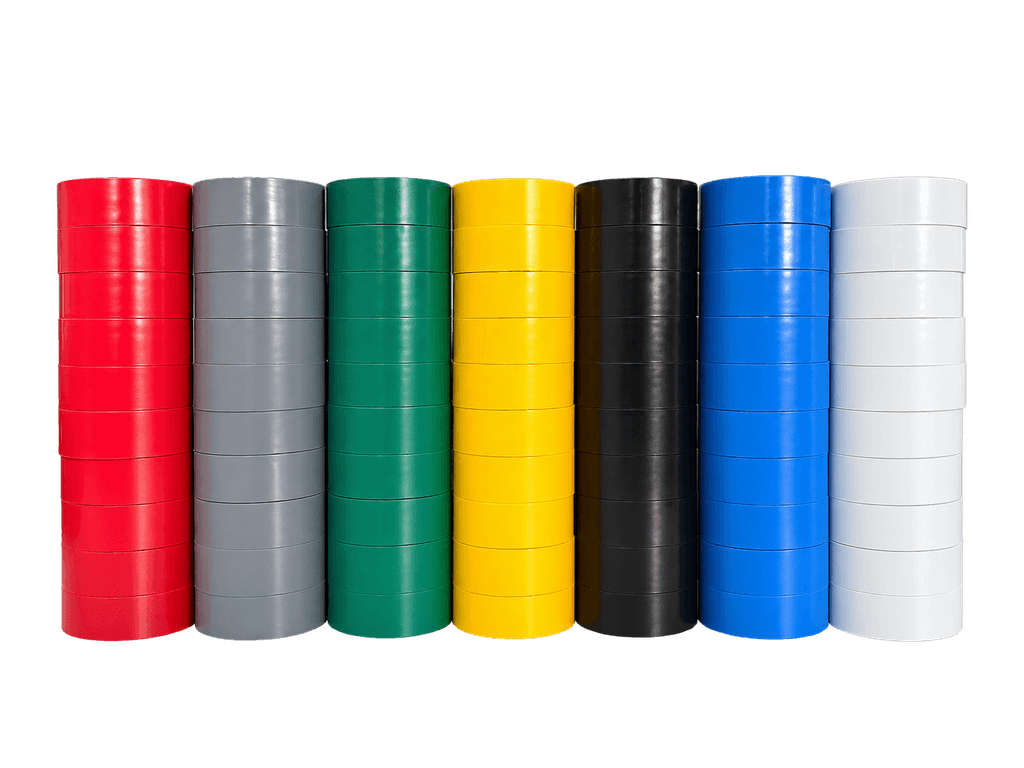
PVC electrical tape is commonly used in electrical work, but how does a thin layer of tape help insulate wires and protect electrical connections?
The answer lies in the insulating properties of PVC film and the way the tape is applied. Understanding these principles helps users use electrical insulation tape more effectively and avoid common application mistakes.
1. What Is PVC Electrical Tape Made Of?
PVC electrical tape consists of two main layers: a polyvinyl chloride (PVC) backing film and a pressure-sensitive adhesive coating.
The PVC film acts as the primary insulating barrier, while the adhesive helps the tape bond to the underlying surface and maintain its position after wrapping.
These two components serve different purposes. The film provides the electrical barrier, while the adhesive helps maintain continuous coverage around the wire or cable.
2. How Does PVC Electrical Tape Provide Insulation?
PVC is a material with high electrical resistance, making it suitable for use as an electrical insulating film.
When the tape is wrapped around a suitable wire or connection, the PVC layer separates conductive parts from their surroundings. This helps reduce the risk of accidental electrical contact.
The effectiveness of insulation depends on several factors:
- Dielectric Strength: Indicates the ability of an insulating material to withstand an electric field without electrical breakdown.
- Film Thickness: The thickness of the PVC backing affects its ability to withstand electrical stress.
- Material Quality: Consistent film composition and thickness help maintain reliable insulating properties.
- Application Quality: Proper coverage without gaps, wrinkles, or damaged areas helps maintain the insulating barrier.
The actual insulation capability depends on the tape grade, voltage conditions, number of layers, and applicable electrical standards. A tape’s general insulation properties should not be interpreted as approval for every voltage or electrical repair.
3. How Do the PVC Film and Adhesive Work Together?
The PVC backing and adhesive coating perform complementary functions during application.
The PVC Film Forms the Insulating Barrier
The flexible film wraps around the wire or cable, creating a physical layer between the conductor and the external environment. Its flexibility also allows it to follow curved surfaces and irregular shapes.
The Adhesive Keeps the Tape in Place
The pressure-sensitive adhesive bonds the tape to the underlying surface and helps prevent the wrapping from loosening. Good adhesion is important because lifted edges or gaps can expose the covered area.
Overlapping Layers Improve Coverage
When the tape is applied with consistent overlap, the wrapping creates multiple layers of insulating material over the covered section. This helps reduce gaps and provides more uniform coverage.
Together, these features allow PVC electrical tape to form a practical insulating covering when used according to its specifications.
4. How to Apply PVC Electrical Tape Correctly
Proper wrapping technique is important for achieving consistent coverage.
Step 1: Prepare the Surface
Ensure the surface is clean, dry, and free from oil, dust, and sharp edges. Always isolate the electrical circuit and verify that it is de-energized before performing electrical work.
Step 2: Start Wrapping
Position the tape near the area requiring insulation. Keep it aligned with the wire or cable and avoid wrinkles.
Step 3: Maintain Consistent Overlap
Overlap each turn evenly to avoid exposed gaps. The appropriate overlap depends on the tape specifications and the requirements of the electrical application.
Step 4: Apply Suitable Tension
Maintain consistent tension while wrapping. Avoid excessive stretching, which may cause the tape to retract or lift after application.
Step 5: Secure the End
Finish the wrap by pressing the tape end firmly against the underlying layer to help prevent it from peeling away.
For electrical connections, follow the specified insulation procedure and applicable electrical standards. PVC tape alone should not replace approved connectors, cable repair systems, or other required insulation components.
5. Common Mistakes and Safety Considerations
Even a suitable electrical insulation tape may not perform as intended if it is applied incorrectly.
- Insufficient Overlap: Gaps between turns may leave parts of the covered area exposed.
- Excessive Stretching: Overstretching can cause the tape to retract or lose its proper shape.
- Poor Surface Preparation: Dust, oil, and moisture may reduce adhesive bonding.
- Incorrect Tape Selection: A grade that does not meet the required temperature or electrical conditions may not provide suitable performance.
- Using Tape on Damaged Cables: Ordinary PVC electrical tape should not be treated as a universal repair solution for damaged cable insulation.
Electrical insulation work should always follow relevant safety regulations and manufacturer instructions. For critical connections or damaged cables, use an approved repair method or replace the affected components as required.
Conclusion
PVC electrical tape works through the insulating properties of its PVC backing and the bonding performance of its adhesive coating. The film provides the electrical barrier, while the adhesive helps maintain secure and continuous coverage.
Understanding how these components work together, along with correct wrapping techniques, is essential for using electrical insulation tape safely and effectively.